Healthcare is no longer confined to the hospital room. Patients can now be monitored remotely, treatment can be tailored to individual needs, and advances in biotechnology are opening new possibilities for repairing damaged tissue.
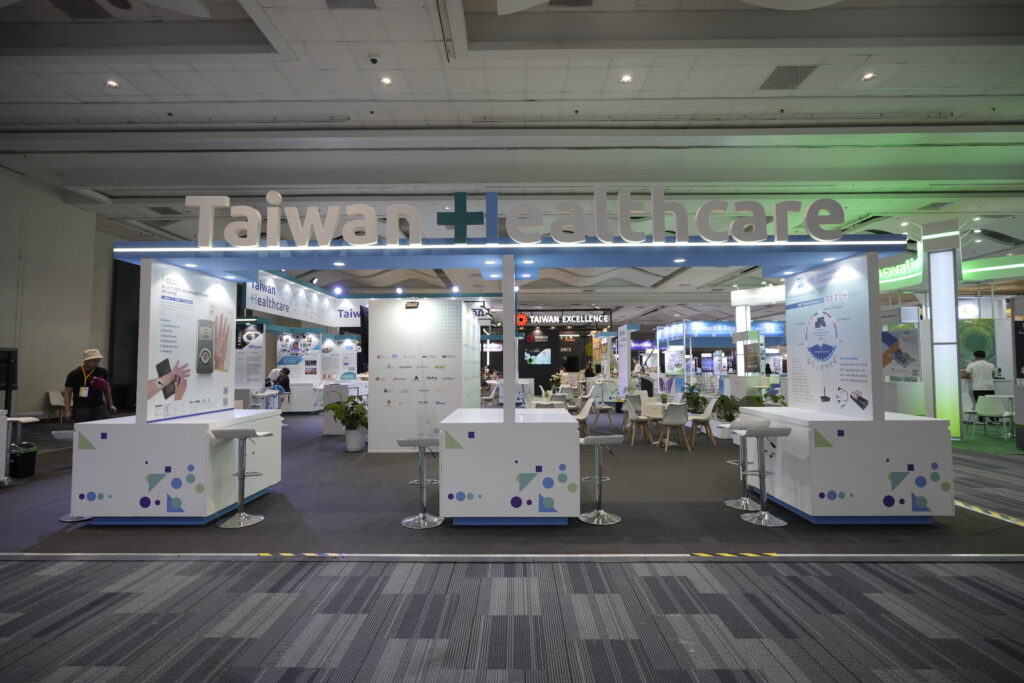
These developments will be among the highlights of Taiwan Expo 2026, where 21 Taiwanese healthcare companies and institutions will showcase medical services, digital health technologies, medical devices, biotechnology, and healthcare products at the Taiwan Healthcare Pavilion from September 17 to 19 at the SMX Convention Center Manila.
The showcase comes as healthcare systems worldwide look for ways to make care more accessible, personalized, and efficient. In the Philippines, the growing demand for healthcare services has likewise increased interest in digital health, remote monitoring, specialized treatment, and new medical technologies.
Taking Healthcare Beyond the Hospital
One of the most visible changes in healthcare is the growing use of connected technologies to monitor patients outside traditional clinical settings.
Quanta Computer will feature QOCA o2b, a patient monitoring and telehealth solution designed to support healthcare delivery beyond the hospital.
Remote monitoring can allow healthcare providers to collect patient information outside conventional clinical environments, potentially supporting follow-up care and allowing clinicians to keep track of patients without requiring every interaction to take place in person.
This has particular relevance in the Philippines, where geography remains a challenge to healthcare access. Digital health tools could help bridge some of the distance between patients and healthcare providers, particularly when regular physical visits are difficult.
Personalizing Treatment
The pavilion will also showcase Taiwan’s expertise in more specialized and technology-driven forms of care.
Shuang Ho Hospital will present its smart healthcare capabilities and international medical services, including precision medicine and integrated care for international patients.
Precision medicine represents a shift away from a one-size-fits-all approach, using individual patient information to help guide diagnosis and treatment.
Taiwan’s healthcare ecosystem has developed within a system supported by its comprehensive National Health Insurance (NHI) program. This has helped create an environment in which healthcare institutions have developed capabilities in smart hospital systems, specialized clinical services, and international medical care.
For Philippine hospitals and healthcare organizations, these capabilities provide potential opportunities for collaboration, knowledge exchange, and the adoption of technologies suited to local healthcare needs.
A New Frontier in Tissue Repair
Beyond digital healthcare, the Taiwan pavilion will also venture into one of medicine’s rapidly developing fields: regenerative medicine.
BioGend Therapeutics will showcase its One-Step Autologous Cartilage Repair System, or RevoCart®, which uses a patient’s own cartilage to repair cartilage defects through a single-stage procedure.
According to the company, the approach does not require in-vitro cell expansion, distinguishing it from regenerative treatments that involve growing cells outside the body before they are implanted.
The technology already has a regulatory foothold in the Philippines. RevoCart received Philippine medical-device registration in April 2024, with the registration valid through March 2029.
Its presence at Taiwan Expo highlights how medical innovation is extending into treatments that seek to harness the body’s own cells and tissues for repair.
Specialized Care as a Strength
The Taiwan Healthcare Pavilion will also showcase expertise in specialized fields, including living-donor liver transplantation, reproductive medicine, and cardiovascular care.
These areas represent another dimension of Taiwan’s healthcare capabilities, combining specialized clinical expertise with advanced medical technologies and services.
For Philippine healthcare institutions, partnerships in such fields could involve more than the acquisition of equipment. They may also open opportunities for professional exchanges, technical collaboration, training, and access to specialized medical expertise.
Building Connections in Healthcare
Bringing these different capabilities together is intended to give Philippine healthcare stakeholders a broader view of Taiwan’s medical ecosystem.
The pavilion will cater to healthcare institutions, medical professionals, businesses, and other industry stakeholders interested in exploring technologies, services, and potential partnerships.
The exhibition is jointly organized by the International Trade Administration under Taiwan’s Ministry of Economic Affairs and the Taiwan External Trade Development Council (TAITRA).
For the Philippine healthcare sector, the technologies on display come at a time when providers are navigating the need to expand access while improving the quality and efficiency of care.
From a patient monitored at home to a treatment designed around an individual’s medical profile, and from smart hospital systems to regenerative therapies, the technologies at Taiwan Expo 2026 reflect a healthcare industry that is becoming increasingly connected and specialized.

Taiwan Expo 2026 will run from September 17 to 19 at the SMX Convention Center Manila.
For more information about the event, exhibitors, and program, visit the official Taiwan Expo 2026 website.