Dr. Jose Rizal’s Noli Me Tangere is set to reach a wider audience, this time through a Modern Standard Arabic translation.
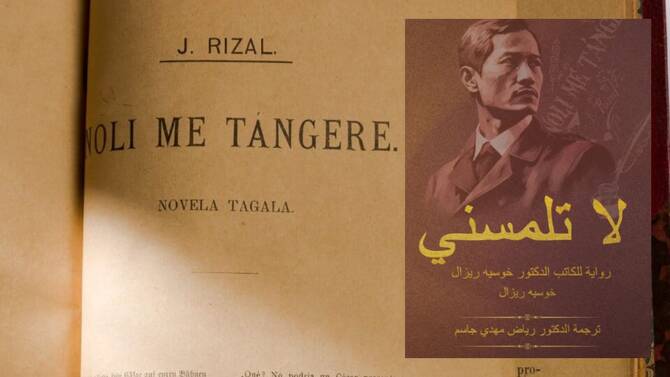
Photo: León Gallery, Philippine Embassy in Iraq
The National Commission for Culture and the Arts (NCCA) recently reaffirmed its support for expanding access to Philippine historical literature by joining the National Historical Commission of the Philippines (NHCP) and the Philippine Embassy in Baghdad in signing a memorandum of agreement for the project. This agreement was formalized on February 9, 2026, at the NHCP Building in partnership with the Department of Foreign Affairs’ Office of Cultural Diplomacy.
Originally published in 1887 and written in Spanish, Noli Me Tangere is widely regarded as a foundational work of Philippine literature and nationalism. The novel portrays the social conditions and injustices of the Spanish colonial period and continues to be studied for its historical and cultural significance.
According to NHCP Chairman Regalado Trota Jose Jr., the Arabic edition is intended for readers from Arabic-speaking nations, several of which were represented during the signing ceremony. While a work of fiction, the novel reflects the Philippines’ aspirations for equality and freedom during the colonial era.
The translation initiative forms part of broader efforts to strengthen cultural exchange and international engagement, particularly in the lead-up to the 2030 Year of Philippine Muslim History and Heritage and Dekada ng Kasaysayan 2026: Year of Philippine Diplomatic History and Diaspora.
Following the memorandum signing, the NHCP also launched Historia Obscura: The Philippines in the 16th and 17th Century in Portuguese Sources, Volumes 1 and 2. The two-volume publication compiles Portuguese archival documents on early Philippine history and was authored and edited by Paulo Jorge de Sousa Pinto, Miguel Rodrigues Lourenço, Pedro Pinto, and Jeremy Roe.
Jose said the project makes historical materials more accessible to scholars, researchers, and students by bringing together documents that were previously less available to the public.
Representatives from Libya, Saudi Arabia, Portugal, and Qatar attended the event, along with officials from the National Library of the Philippines, the University of the Philippines Diliman, the University of Santo Tomas, Far Eastern University, and public libraries in Quezon City and Manila. Copies of Historia Obscura were distributed to participating institutions.
ALSO READ: Filipino Books and Authors Share the Spotlight at the First Akdang Pinoy Choice Awards
What are your thoughts on this? Let us know in the comments.
Do you have a story for the WhenInManila.com Team? Email us at wheninmanila@gmail.com or send us a direct message at WhenInManila.com’s Facebook Page. Interact with the team and join the WhenInManila.com community at WIM Squad, and join our Viber group to stay updated with the latest around the Philippines and beyond!