Last March 23–28, the UP Association of Political Science Majors held PolSci Week 2026, a week-long celebration dedicated to fostering political awareness, engagement, and discourse in society.
The roster of activities featured the return of its flagship events, Dynasty Feud and Dalubbanwahan, along with informative content on the origins of political science, the development and current condition of the discipline in the Philippines, and curated media recommendations related to political science and Philippine politics.
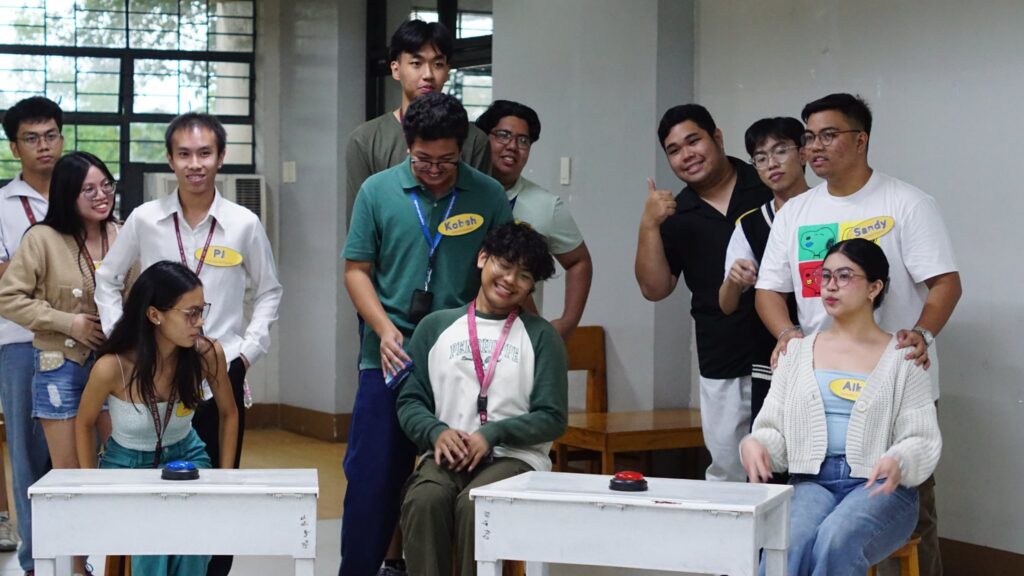
A highlight of the week was Dynasty Feud 3.0, held on March 25, where five dynasties competed for the top spot. The Ki Phi Mala Khi Dynasty emerged as champion after a strong showing in the Fast Money round, with the Diabetic Dynasty placing second. Meanwhile, the Aguinaldo Dynasty secured third place after ending their run in the Triple Money round, having triumphed over the Shimenet Dynasty and the Qing Dynasty during the Double Money round.
Another impactful sub-event was this year’s iteration of Dalubbanwahan, held on March 28. The lecture series, titled “The Philippine Learning Crisis: How Weak Foundational Literacy Undermines Democratic Governance,” featured speakers who shared their insights on the Philippine educational system, its impact on the country’s political landscape, and ways to strengthen literacy among learners and communities.
Mx. Juniesy Martinez Estanislao opened the lecture series with “MULAT: The Learning Crisis and Information Asymmetry,” followed by Atty. Noel Marabut Baga with “SALAT: Low Foundational Literacy and Ineffective Political Accountability.” Finally, Mx. Jornie D. Lumintao discussed “KAPIT: Heuristic Political Behavior as Adaptation.”
With the successful conclusion of PolSci Week 2026, the organization reaffirmed its commitment to creating spaces for critical political engagement by bringing together students, academics, and political enthusiasts to discuss pressing issues shaping the nation.