
President Ferdinand Marcos Jr. announced on May 10, 2026, that the fire at the non-operational Navotas Sanitary Landfill had been fully extinguished, exactly a month after it first broke out.
In a Facebook post, Marcos said response operations involved national agencies, local government units, and private sector partners working continuously to contain the fire and prevent further damage to nearby communities.
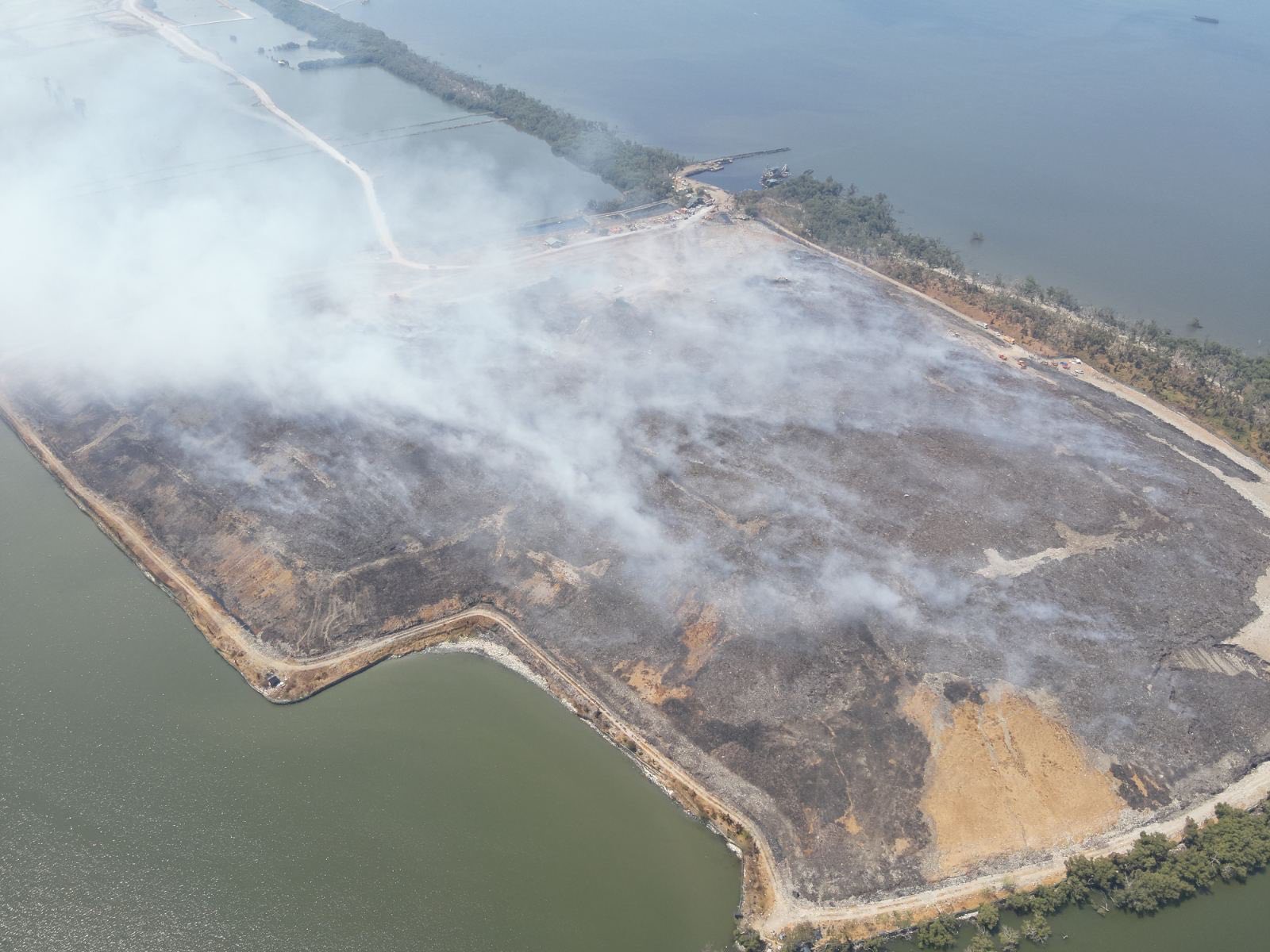
Photo: John Rey Tiangco/Facebook
“What matters most now is ensuring the safety of our fellow citizens and fully restoring normalcy in the communities surrounding Navotas,” the President said.
Despite the fire being declared out, Marcos directed concerned agencies to continue 24/7 monitoring in the area. This includes air and water quality testing, thermal scanning to identify any remaining hotspots, and health monitoring of residents and responders affected by the incident.
The President also acknowledged the efforts of the Bureau of Fire Protection, Department of Public Works and Highways, Department of Transportation, environmental teams, and the Navotas local government. Private companies, including San Miguel Corp., Prime Infra, and SM Prime were also recognized for assisting in the response operations. Marcos likewise thanked the Japanese government for providing technical assistance and additional support.
The fire started on the evening of April 10, 2026, at the 44-hectare Navotas Sanitary Landfill in Barangay Tanza. Authorities said that methane gas built up from decomposing waste materials likely reached its ignition point, triggering the blaze.
While the fire was initially declared under control two days later, smaller fires continued to flare up in different sections of the landfill over the following weeks. Thick smoke from the site affected air quality across Metro Manila and nearby provinces, with some areas recording “very unhealthy” air conditions.
On April 28, 2026, Obando, Bulacan, declared a state of calamity after smoke from the landfill reached several communities. The Philippine Space Agency (PhilSA) also reported that satellite data showed the smoke spreading as far as Bataan.
This incident also raised environmental concerns. International marine conservation groups warned about possible contamination risks from pollutants linked to burning waste, particularly because the landfill is located near fishing grounds, aquaculture areas, and coastal communities connected to Manila Bay.
According to the Department of Environment and Natural Resources (DENR), the landfill had been operated by Phil Ecology Systems Corp. from 2006 until operations stopped on August 26, 2025, ahead of the expiration of its franchise and environmental permit later that year.
The property was later handed to San Miguel Aerocity Inc. following a court-approved expropriation tied to the proposed New Manila International Airport project.
ALSO READ: Metro Manila Under Haze After Navotas Landfill Fire—Here’s How Residents Can Protect Themselves
What are your thoughts on this? Let us know in the comments.
Do you have a story for the WhenInManila.com Team? Email us at wheninmanila@gmail.com or send us a direct message at WhenInManila.com’s Facebook Page. Interact with the team and join the WhenInManila.com community at WIM Squad, and join our Viber group to stay updated with the latest around the Philippines and beyond!