Ten new buses are set to arrive in Davao City as early as September 2025, marking a major update in the city’s effort to modernize public transport and address the worsening Davao traffic through the Davao City Interim Bus System (DIBS), a program that’s solely funded, conceptualized, and operated by the City Government of Davao.
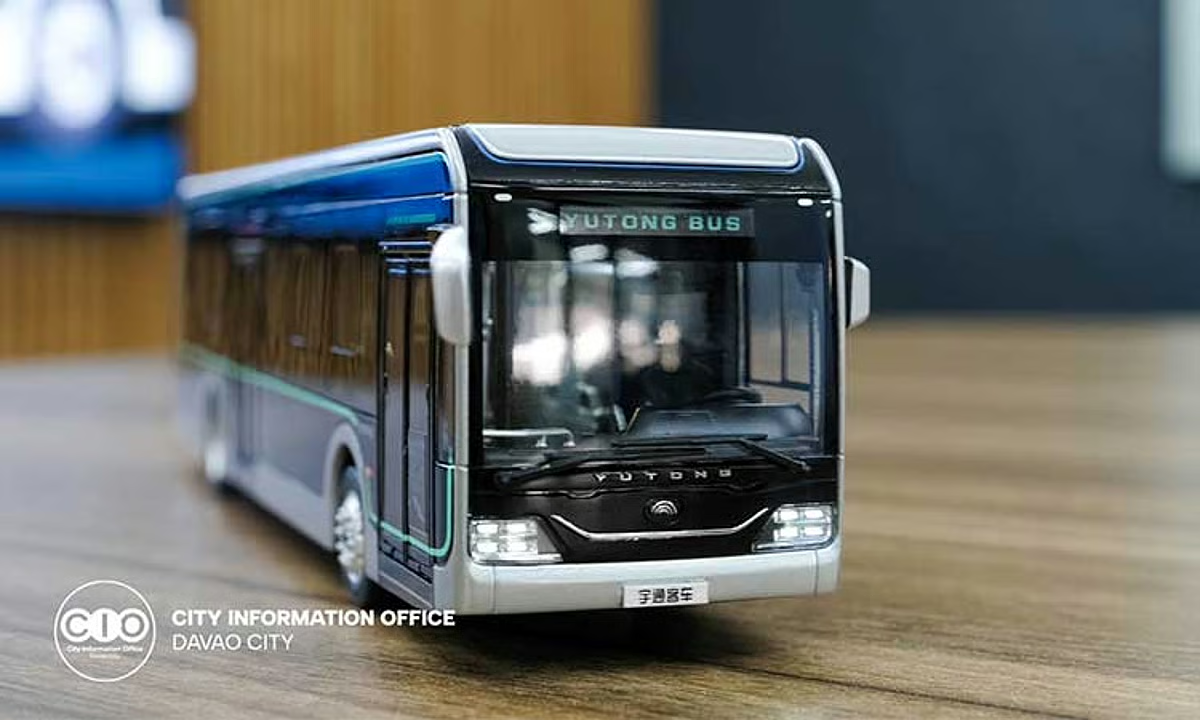
Unlike most public transport systems, which rely on national agencies or private operators, DIBS is uniquely local, built entirely through city resources and leadership. The project aims to offer safer, more efficient, and inclusive mobility solutions while laying the groundwork for a fully integrated bus network in the future.
When Are the Buses Coming?
According to Atty. Tristan Dwight Domingo, Project Manager of the Davao City Bus System, the 10 new buses will be shipped by mid-August and are expected to arrive by the end of August or early September. The city hopes to begin deployment by late September or early October.
The drivers, who will have earned TESDA’s NC3 Bus Driving certification, will undergo on-ground training using the new units before they hit the road.
Free Rides for Everyone
Once operational, these buses will offer free rides during peak hours, giving Dabawenyos a reliable, cost-free way to commute at some of the busiest times of the day.
As of writing, the Land Transportation Franchising and Regulatory Board (LTFRB) is finalizing the official list of routes, which will guide the rollout. The new buses will not replace the Peak Hours Augmentation Bus System (PHABS); instead, DIBS and PHABS will operate alongside each other to meet growing demand. PHABS was first introduced in 2019 to help transport commuters to downtown Davao more easily.
“Even with DIBS, PHABS will continue because it’s been a huge help,” Domingo said during an interview on Davao City Disaster Radio.
What’s Happening Behind the Scenes?
While Dabawenyos wait for the buses to arrive, the city is already hard at work. TESDA-certified mechanics are being hired, and staffing is underway for the DIBS command center, which will monitor the system’s daily operations.
Ongoing transport studies are also helping the city assess which areas would benefit most from DIBS and PHABS, ensuring smarter, more targeted deployments in the future.
Why This Project Stands Out
DIBS isn’t just another transport initiative. It’s a rare example of a fully city-led system that goes beyond stopgap solutions. From funding and planning to training and deployment, everything is managed in-house by the local government, a model that reflects Davao’s larger push for inclusive, data-driven, and sustainable urban development.
This next phase is just the beginning. With free peak-hour rides, locally trained drivers, and a city-led command center, Davao is showing what local leadership can look like, on the ground and the road.
Are you excited for the new bus system? Let us know in the comments!
ALSO READ: Davao’s New Bus System: Here’s Everything You Need to Know About It
Do you have a story for the WhenInManila.com Team? Email us at story.wheninmanila@gmail.com or send us a direct message at WhenInManila.com Facebook Page. Interact with the team and join the WhenInManila.com Community at WIM Squad! We also share our stories on Viber, join us!

