
Always dreamed of a unique experience in Europe? The Vilnius Light Festival returns from January 23 to 25, 2026, transforming Lithuania’s capital into an open-air gallery of contemporary light installations across its UNESCO-listed Old Town. Now in its eighth year, the three-day event marks Vilnius’ 703rd birthday and features an evening route of 24 illuminated artworks, open daily from 5 PM to 10 PM.
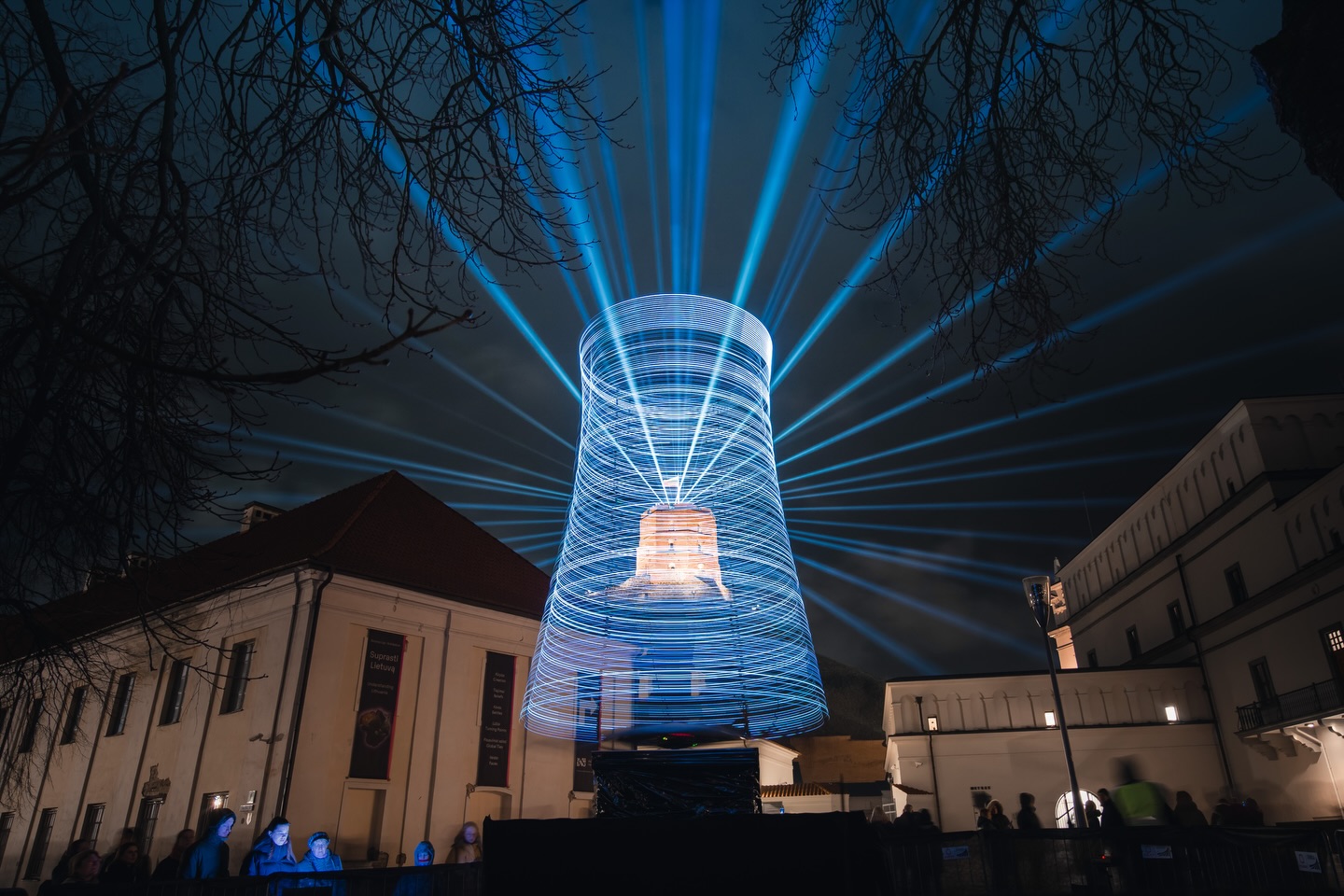
Photo: Go Vilnius
Held during the darkest time of the year, the festival’s mission is to turn winter darkness into a citywide spectacle—spotlighting Vilnius’ architecture, from historic façades to romantic courtyards often missed in daylight.
“Winter darkness becomes our stage,” said Paulius Jurgutis, head of Vilnius Cultural Center. “We want visitors to discover the fascinating corners of Vilnius they would never find by daylight—hidden courtyards and quiet squares that suddenly transform into places of congregation. Light art reveals the city from a unique perspective: architectural details you’d normally walk past become fairytale-like spaces. Our goal is to help people see familiar locations with fresh eyes, rather than simply create a big, flashy spectacle.”
On-trend for “noctourism” and Gen Z mini-breaks
The festival aligns with the rise of “noctourism”—travel experiences centered on after-dark culture. As one of the most intriguing travel trends of 2026, noctourism reflects a growing preference for activities beyond traditional daytime sightseeing, including light installations, evening events, and nighttime urban exploration.
Vilnius delivers this in concentrated form. With installations opening at 5 PM, visitors have five full hours to explore light art while still enjoying relaxed daytime schedules.
The event also reflects broader shifts in travel behavior. Airbnb’s 2026 travel predictions indicate that Gen Z travelers are increasingly opting for ultra-quick international trips, with 1 to 2-day getaways growing faster than longer vacations. Additionally, 65% of top-searched travel dates and cities for 2026 coincide with major cultural and sporting events, as travelers prioritize experiences that turn tickets into passports.
Diverse works by international artists
In 2026, the festival continues its proven format of free public installations—no tickets or advance registration required—spread across church interiors, baroque courtyards, historic squares, underground spaces, and lesser-known corners of the Old Town.
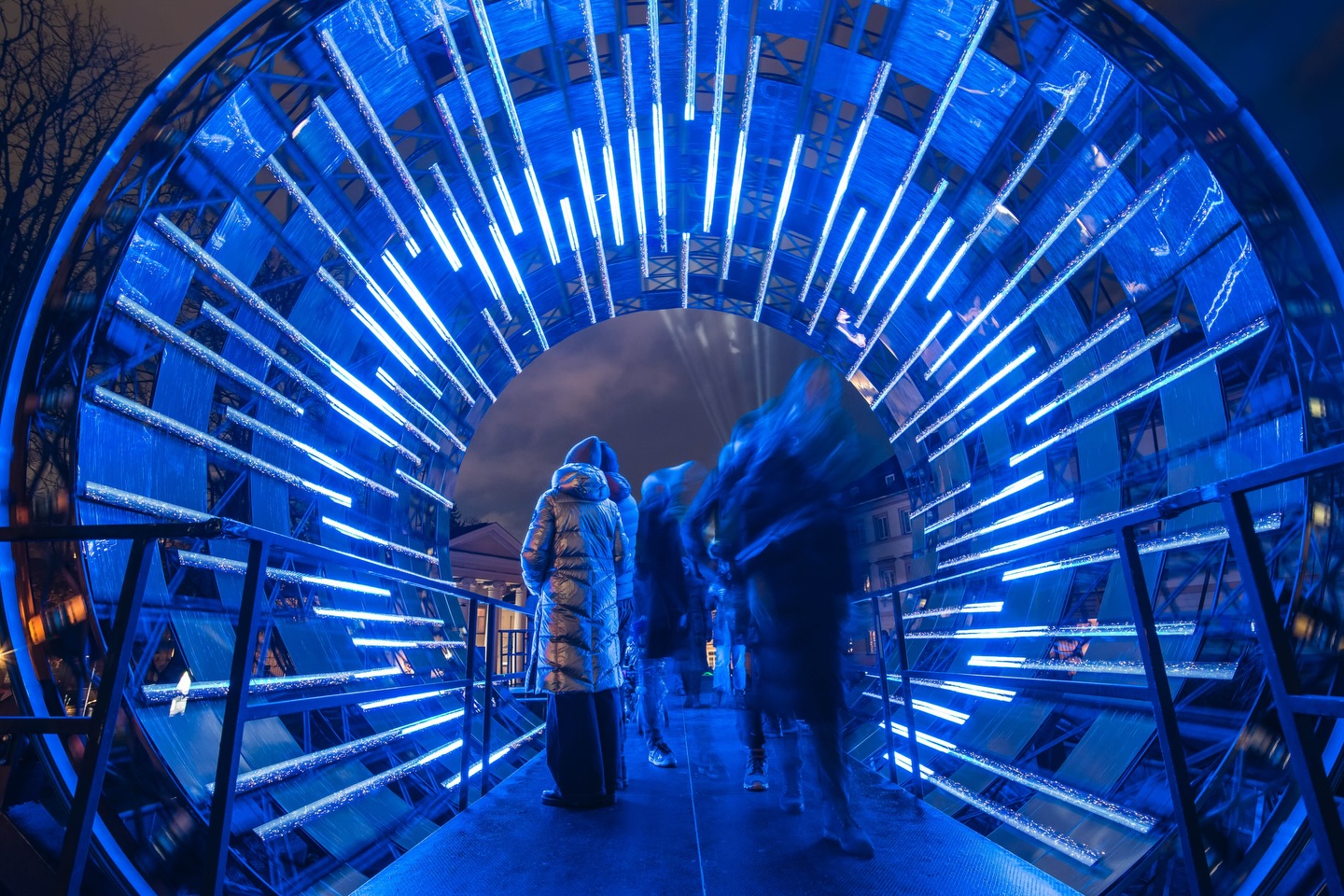
Photo: Go Vilnius
This year’s program features 15 works by artists from nine countries, alongside seven student works and four additional objects.
Themes explored range from mold and plant life to solar energy and outer space. Notable works include:
-
Liquid Lens, an experimental meditation on optical illusions by Italian artist Alessandro Lupi
-
The Bird of a Thousand Voices by Boris Acket (Netherlands), a motor-controlled installation exploring memory and imagination
-
Deviation by German artist Sven Sauer, which uses light as an architectural force to create immersive sensory environments
-
Alcove Ltd. by Encor Studio (Switzerland), juxtaposing architecture, light, and spatial perception
-
Memory Garden by Lithuanian creators Agnė Stirnė and Oskaras Stirna, transforming wildflowers, leaves, and pebbles into playful tools for exploration and creativity
-
αsκlipion, a plant-oriented installation by returning French artist Emilien Guesnard, created in collaboration with sound designer Cédric Béron, biologist Emeline Mourocq, and herbalist Claire Lebeau
To help visitors navigate the route, the Vilnius Light Festival app provides maps, installation descriptions, and wayfinding tools for both iOS and Android.
Winter-friendly activities beyond the festival
Outside the evening programming, Vilnius offers plenty of winter-friendly attractions—all reachable within about 30 minutes from anywhere in the city. These include the MO Museum for contemporary art, Michelin-listed dining, independent galleries, and even Europe’s most accessible urban ski slope in Liepkalnis.
Easy access from across Europe
Vilnius is easily reached via direct flights from major European cities such as Frankfurt, Copenhagen, Helsinki, Amsterdam, London, and Warsaw. Its compact Old Town is highly walkable despite winter temperatures, while buses and trolleybuses provide convenient access to installations along the festival route.
The festival remains free of charge, reflecting Vilnius’ approach to cultural programming as public infrastructure—and serving as a birthday invitation to experience the city after dark.
ALSO READ: This Fine-Dining Resto in Northern Italy Brings Filipino Warmth to a European Table
What are your thoughts on this? Let us know in the comments.
Do you have a story for the WhenInManila.com Team? Email us at wheninmanila@gmail.com or send us a direct message at WhenInManila.com’s Facebook Page. Interact with the team and join the WhenInManila.com community at WIM Squad, and join our Viber group to stay updated with the latest around the Philippines and beyond!


