
Contemporary Filipino design often finds itself pulled between two directions. On one side are traditional forms and craft practices preserved in their original context; on the other are forward-looking works that completely embrace modern design language. Yet a growing number of creatives are beginning to explore the space between those extremes.

Photo: TeamAsia
Rather than treating culture as something to either protect or move beyond, they approach it as an active, evolving practice—one that continues to expand through the people willing to engage with it.
If there is a term for this kind of creative, it must be this: the ancestral futurist. This is someone who studies the past deeply enough to help shape its future; someone who understands that the inheritance of ideas is not the end of a story, but an invitation to continue it.
Among the key emerging voices embodying this mindset is Filipino industrial designer Joshua “Joshi” Li.
Joshi is a summa cum laude graduate of the Savannah College of Art and Design (SCAD). At SCAD, he was part of the team behind Aether 912, an award-winning concept vehicle recognized by the Red Dot Design Award.
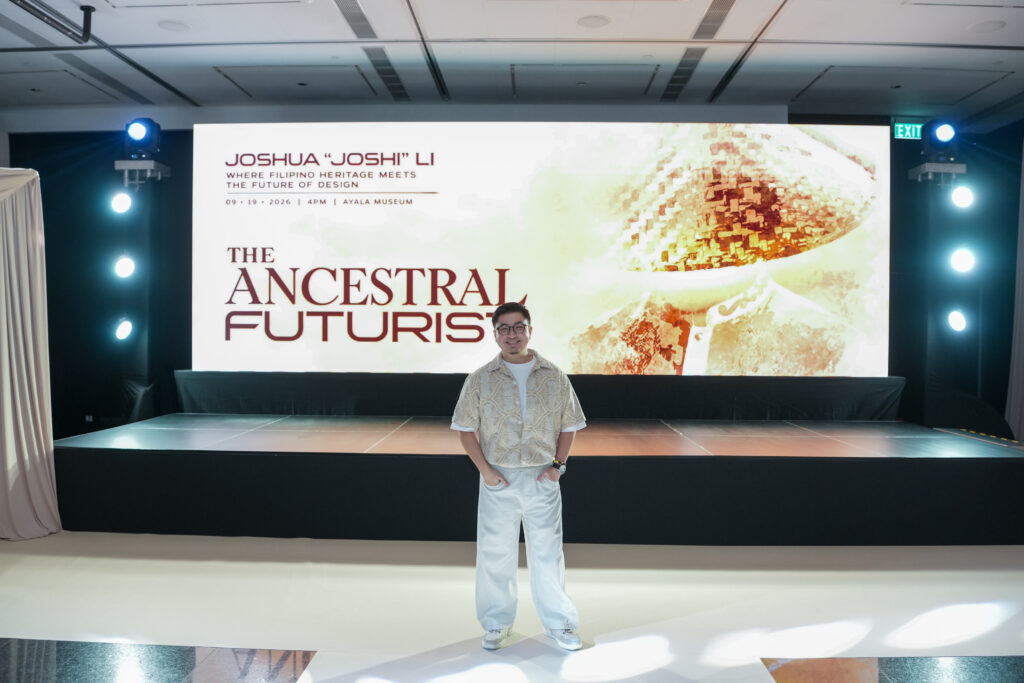
Photo: TeamAsia
His work has also received recognition from other international award programs, such as The Rookies and the International Design Awards (IDA). Through collaborations with The Coca-Cola Company and Kohler Co., he has contributed to products the companies have since patented.
This combination of technological fluency and his desire to understand the thinking behind Filipino craft traditions would eventually become central to his identity as an artist. On September 19, 2026, his work will launch through his first-ever collaboration with the Ayala Museum.
Design as continuation
Known for his use of digital fabrication and contemporary manufacturing techniques, Joshi approaches design as both exploration and storytelling. His practice explores how cultural knowledge can move across generations, materials, and technologies without losing its meaning. Through Moodi Design, the studio he founded, he transforms ideas into tangible experiences, using objects to communicate ideas, emotions, and cultural narratives beyond words. For him, design became another language.

Photo: TeamAsia
The result is a body of work that sits between reverence and reinvention—deeply informed by what came before, yet equally interested in what comes next. Rather than borrowing recognizable motifs or recreating traditional forms, he looks beneath the surface, drawing from the logic, systems, and cultural thinking embedded within Filipino craft traditions.
Those ideas are then translated through contemporary fabrication processes, creating objects shaped by tools that belong to the present, yet grounded in ideas that have existed far longer than the technologies used to create them.
The proof in Pamana
For Joshi, the question has never been whether heritage and innovation can coexist. The more interesting question is what becomes possible when they do.
That thinking is perhaps most visible in the Pamana Collection Tanglaw, his newest collection of digitally fabricated lighting pieces. Inspired by the role of light in the Filipino home, the collection brings together five 3D-printed lamps crowned with woven salakots, each piece drawing from a different thread of Filipino identity.

Photo: TeamAsia
Through details inspired by the barong, Filipiniana, and other iconic pieces of traditional clothing, the collection transforms familiar cultural narratives into contemporary forms that celebrate the people and histories behind them. It is this balance of curiosity and care that defines Joshi’s approach as an ancestral futurist. Every exploration begins with care and an understanding of what came before.
Looking beyond preservation
What makes Joshi’s work compelling is not the technology behind it, but the intention guiding it. Digital fabrication may shape the final object, but the deeper interest lies in how it allows familiar ideas to remain relevant without remaining unchanged.
Today, conversations around heritage often focus on preservation, but preservation is only one part of the story. Part of what allows craft traditions to endure is the willingness to build from them while honoring their roots.
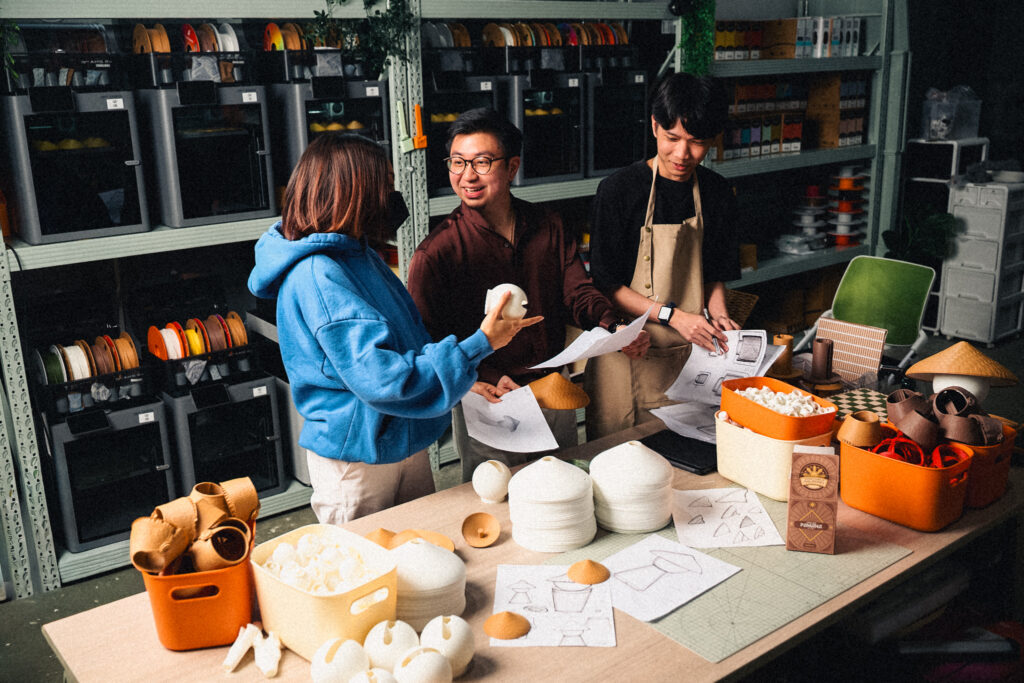
Photo: TeamAsia
Joshi’s work offers a glimpse of what that might look like. Through contemporary design, digital fabrication, and an ongoing curiosity about the ideas embedded within Filipino craft, he explores how cultural inheritance can adapt and thrive across eras.
Joshi isn’t simply looking backward, nor is he rushing forward—he is someone in the present committed to carrying meaningful ideas into new forms, new contexts, and new generations.
ALSO READ: Filipino Architects Can Showcase Climate-Smart Ideas in This Design Competition
Do you have a story for the WhenInManila.com Team? Email us at wheninmanila@gmail.com or send us a direct message at WhenInManila.com’s Facebook Page. Interact with the team and join the WhenInManila.com community at WIM Squad, and join our Viber group to stay updated with the latest around the Philippines and beyond!