Ayala Foundation, Inc. (AFI) reveals architectural details of the purpose-built home of Kontempo – Center for Contemporary Art, offering insight into the spatial, environmental, and material strategy shaping the new institution.
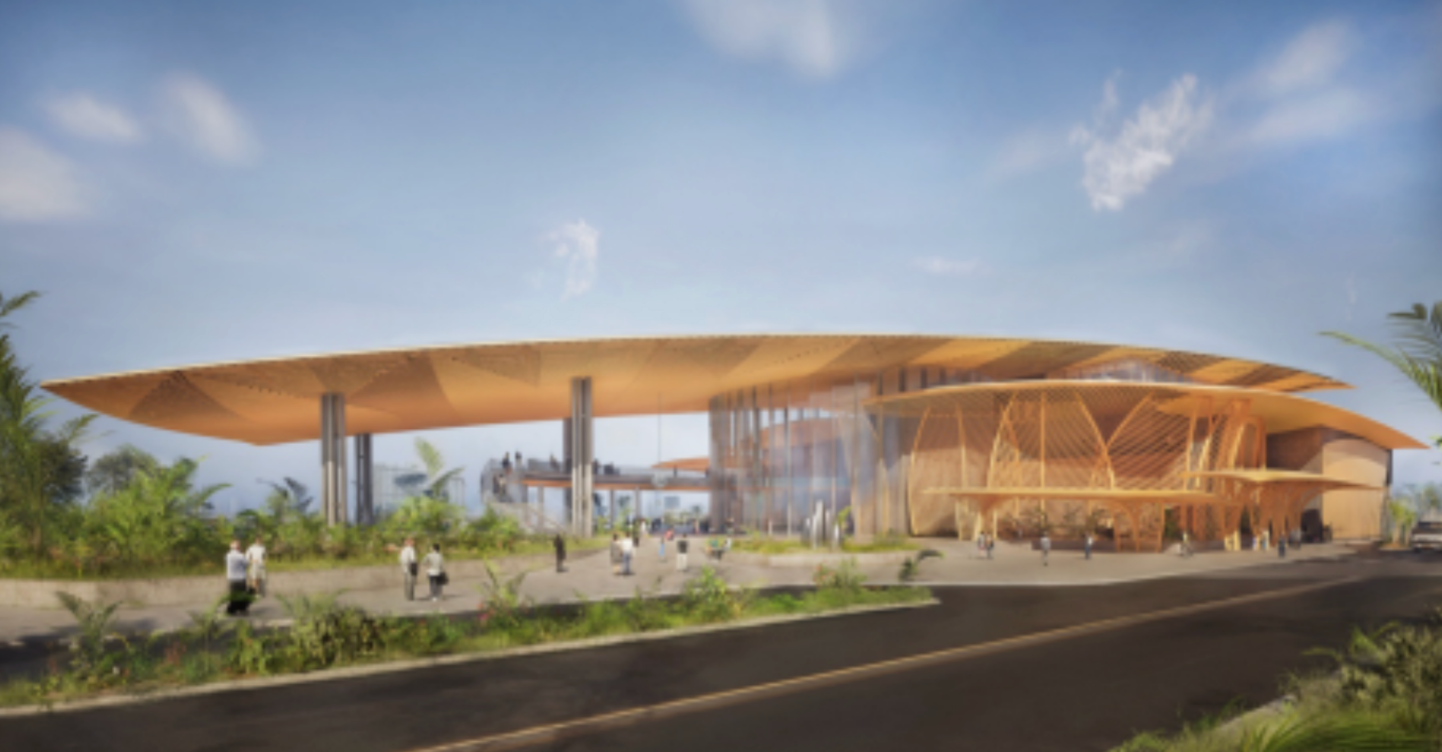
Kontempo – Center for Contemporary Art, Philippines (rendering) © Ayala Foundation, WHY Architecture and Lor Calma & Partners
Located along the Pasig River and within Circuit Makati, a retail, entertainment, and residential estate, Kontempo will serve as a non-collecting, programme-driven center for contemporary artistic practice and public engagement. The approximately 100,000 sq ft GFA institution will comprise three primary gallery spaces alongside a range of public and programme areas. Built to be flexible and promote adaptable institutional use over time, Kontempo’s lead design architect is Kulapat Yantrasast, in collaboration with Manila-based Lor Calma & Partners.
Kulapat Yantrasast, Founder and Creative Director of WHY Architecture, said, “The design of Kontempo is an act of devotion to the vitality of Circuit Makati, the spirit of Manila, and the quiet poetry of the Pasig River. It is a place where nature and art meet, and where international culture converges with local creativity to produce something new. At its center is a single, generous roof, beneath which life unfolds without boundary, inside and out, day and night. The roof gathers, holds, and invites. It is both stage and sanctuary. Materials draw from the language of the land, palm, earth, and tropical abundance, chosen for the stories they carry. Flexible galleries support a range of contemporary practice, with classrooms alongside them to connect creation and learning. Kontempo is conceived as a model for the twenty-first-century art institution, rooted in the Philippines and open to the world.“
At the heart of the structure is a dramatic canopy inspired by the morphology of palm fronds. A system of lightweight steel “leaves” forms a porous roofscape that provides shelter, filtered daylight, and natural ventilation, incorporating large overhangs, shaded walkways, and water-sensitive planting. Together, these elements minimize solar gain, reduce energy consumption, and extend the institution’s footprint into the surrounding landscape. The building allows nature to move through and around it, unfolding into a series of open-air spaces for gathering, reflection, and public activity.
Rather than presenting a singular architectural object, the design emphasizes permeability and civic openness. A series of shaded plazas and landscaped berms connect the building to both river and city, positioning Kontempo as part of everyday community life. The entry plaza, modelled on traditional communal shelters, serves as the primary point of arrival and orientation beneath the canopy.
The galleries are housed within woven envelope structures that abstract traditional Filipino craft practices. Referencing indigenous weaving techniques from abaca, piña, bamboo, and palm fibers, the façade panels act as a climatic screen, reducing heat gain while expressing the material intelligence embedded in Philippine architectural heritage. Designed to international standards, the gallery spaces support a wide range of contemporary practices and are configured for long-term flexibility and future reconfiguration. Covered outdoor areas further extend the building’s functionality, providing weather-protected spaces that remain active throughout the year and reinforcing the institution’s role as an open, continuously used civic environment.
For Kontempo, sustainability at every stage is an embedded principle of design. Orientation, massing, and envelope strategy prioritize passive cooling, shaded circulation, and long-term operational resilience, reinforcing Kontempo’s role as a major cultural institution within the country and beyond.
Ed Calma, Project Architect and founder of Lor Calma & Partners, added: “Working in close collaboration with Ayala Foundation Inc. and WHY Architecture, we have sought to translate our museum expertise into a building that responds to [the] Philippine climate, construction practice, and material conditions. The project will achieve LEED, EDGE, and WELL certifications, ensuring high standards of sustainability, environmental performance, and occupant well-being.
Materials have been selected to resonate with the tones and textures of the Philippine archipelago. Exterior finishes and interior surfaces respond to the dappled light of the tropics, echoing the shifting colors of local flora and historic buildings across the islands.
Fernando Zobel de Ayala, Chairman of Ayala Foundation, said: “Kontempo is designed to be a public institution for the long term—one that supports artists, audiences, and communities across generations. The building and architecture play a key role in this vision. From the beginning, we wanted a space that would be welcoming, accessible, and connected to its surroundings, while also engaging with the international art community. We are grateful for the collaboration with Kulapat Yantrasast, Ed Calma, and their teams in bringing this vision to life.”
Further details of the programme and public spaces will be announced as the project progresses. Kontempo is set to be completed by late 2028.