For more than twenty-five years, Black Hole existed quietly—a demo, a notebook, a voice from another lifetime.
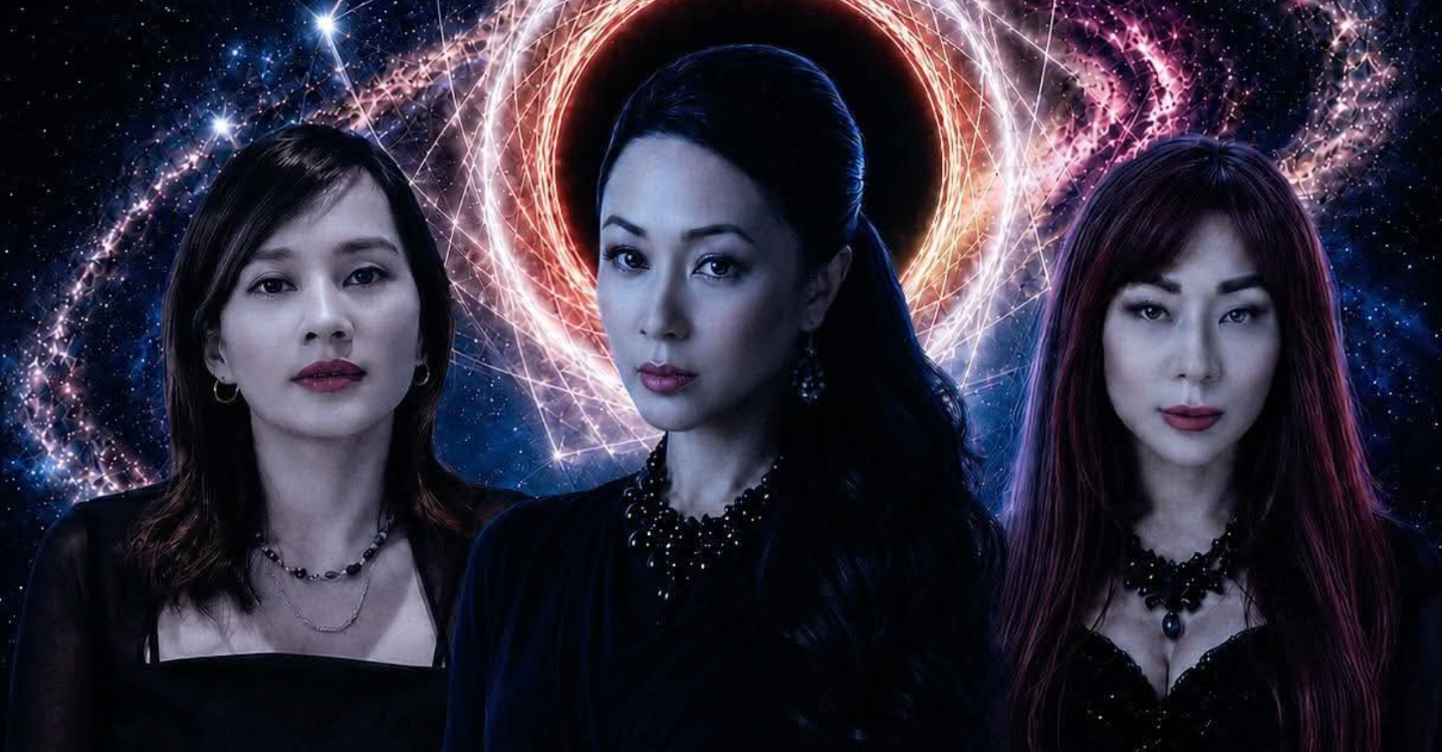
Photo: junoredfeather
Written by Vanessa Paredes Limjap during her adolescence, Black Hole was born from a season of searching. It emerged at a time when life’s biggest questions seemed to have no clear answers, when the universe felt infinite, yet the soul could still feel impossibly confined.
Its lyrics drift through distant stars, empty space, crowded rooms, forgotten dreams, and unseen forces that seem to pull us away from the light. Beneath its cosmic imagery lies a question that has never belonged to one generation alone:
What is the black hole? Is it fear? Loss? Pride? Violence? Addiction? The relentless noise of the world? The silence within ourselves? Or the unseen forces—emotional, psychological, spiritual, or societal—that quietly keep us from becoming who we were meant to be?
The song never offers an answer. Instead, it invites every listener to find their own.
Perhaps that is why Black Hole feels even more relevant today than when it was first written. We live in a world that is constantly moving yet often feels stuck. We witness division where there should be understanding, noise where there should be truth, despair where hope longs to emerge. Individually and collectively, we all encounter unseen gravity—something that pulls us away from love, forgiveness, purpose, and hope.
The black hole is different for everyone. Yet somehow, everyone knows what it feels like.
At the heart of the song is a refrain that repeats like both a question and a quiet prayer: Love. God. Hope.
Three simple words that continue to shine through the darkness.
For years, Black Hole remained unheard outside a small circle.
Then something remarkable happened.
Vanessa’s sister, (Juno) Redfeather, together with Kitchie Nadal, kept returning to the song. They believed its honesty had not faded with time—it had deepened. They encouraged Vanessa to finally release it, convinced that the emotions captured decades ago had become even more meaningful today.
Listening to the lyrics now reveals new dimensions. What once sounded like youthful longing has matured into something timeless. Some battles happen around us; others unfold quietly within us. The greatest distances are not measured in light-years, but in the invisible spaces between who we are, who we were, and who we long to become.
Without prescribing a single interpretation, Black Hole gently explores those unseen landscapes of the human experience—where longing meets faith, hope wrestles with despair, and light continues to exist even when darkness seems overwhelming.
The recording is produced by Nick Lazaro, whose connection to the song feels almost impossibly fated.
More than two decades ago, while visiting the Philippines from San Francisco, Nick attended a gathering in Alabang. During the evening, a young woman sat at the piano and performed with fearless originality—singing, improvising, creating without restraint. That young woman was Vanessa.
The performance left such an impression on him that he would later remember thinking, If artists like this exist here, perhaps this is a place worth calling home.
Years later, he did.
Only much later did he discover that he would be producing the very song written by the same young songwriter who had unknowingly inspired him all those years before.
Some stories don’t come full circle.
They become constellations.
Black Hole is more than a collaboration between Vanessa Paredes Limjap, Juno Redfeather, Kitchie Nadal, and producer Nick Lazaro.
It is the preservation of a voice that remained true to itself across twenty-five years.
A reminder that the questions we carry often outlive the seasons in which they were first asked.
That our youngest selves sometimes speak truths our older selves spend decades trying to understand.
And that while every person has their own black hole, every person is also capable of searching for the light beyond it.
The recording remains intentionally honest—raw where it needs to be, imperfect where it should be, and unfiltered where authenticity matters most.
Because some emotions lose their meaning once they’re polished.
In many ways, the song was already finished twenty-five years ago. What it needed was not more writing, but time—the right moment, the right season, the right opening for it to be heard. Released now, decades later, it still does not sound dated. If anything, it proves that Vanessa was ahead of her time: the music belongs to this era as naturally as it belonged to the moment it was first written.
Twenty-five years later, Black Hole finally emerges—not as a song rediscovered, but as a song arriving exactly when it was meant to.
Perhaps the world doesn’t need more perfect songs.
Perhaps it simply needs more honest ones.