
On the first night of stricter curfew enforcement under the Department of the Interior and Local Government’s (DILG) Safer Cities initiative, police visibility was noticeably heavier in transport hubs, school zones, and busy roadside areas.
The DILG has directed local units to tighten implementation of existing public safety rules, including a 10 PM curfew for unsupervised minors unless they are traveling for school, work, or other justified purposes. Officials say the move is part of efforts to maintain order in public spaces while sustaining a reported long-term decline in crime rates.

Photo: Alessandro del Gobbo/Pexels
The Philippine National Police said that during initial operations, thousands were approached or flagged for verification, including over a thousand minors.
But beyond the numbers, the rollout quickly raised a more sensitive question: what happens when a minor is found outside during curfew hours, especially if they are alone?
Curfew enforcement doesn’t automatically mean criminal liability
Legal experts emphasize that curfew enforcement, even when strictly implemented, does not automatically translate to criminal arrest for minors.
Atty. Josalee Deinla, a human rights lawyer, pointed out that minors are covered by the Juvenile Justice and Welfare Act (RA 9344), which treats children in conflict with the law differently from adults. In curfew-related situations, she said, detention is not the default response.
“While curfews on unsupervised minors may be validly imposed, they must be established through a local ordinance and must comply with constitutional standards protecting minors’ rights and welfare,” Deinla shared with PhilSTAR L!fe.

Photo: Rica Naypa/Pexels
Instead, interventions are expected to prioritize diversion, family responsibility, and community-based programs rather than penal sanctions.
In practical terms, this means that being “picked up” during curfew enforcement is not the same as being arrested for a criminal offense in the adult legal sense, at least not under ordinary circumstances.
Where enforcement becomes legally sensitive
While curfew rules may exist through local ordinances, their enforcement sits within broader constitutional limits.
Atty. Michael Tiu Jr. of the UP College of Law noted that the DILG itself does not enact new criminal laws but oversees the implementation of policies by local government units and law enforcement agencies.
This becomes important when enforcement actions begin to resemble detention or restriction of liberty, especially for conduct that is only penalized at the local level.
Deinla, who is also part of the National Union of Peoples’ Lawyers (NUPL), raised a related concern in a separate statement: “We raise a basic legal question: if these alleged violations are punishable only by fines, why were people arrested or taken into custody at all?”
The Supreme Court’s ruling in SPARK v. Quezon City is often cited in discussions on curfews, as it clarified that restrictions on movement must meet strict constitutional standards—meaning they must serve a compelling public interest and be narrowly tailored.
The issue of how rules are applied on the ground
Even when curfew ordinances are legally valid, implementation can vary depending on local practice and police discretion.
Deinla raised concerns that enforcement must remain consistent and non-discriminatory. She noted that minors should not be treated differently based on appearance, location, or socioeconomic background, and that protections under RA 9344 must be observed in all cases.
Questions have also been raised in past cases about how public safety rules overlap with policing standards such as “reasonable suspicion,” especially when officers conduct stop-and-frisk-style checks or routine street inspections.
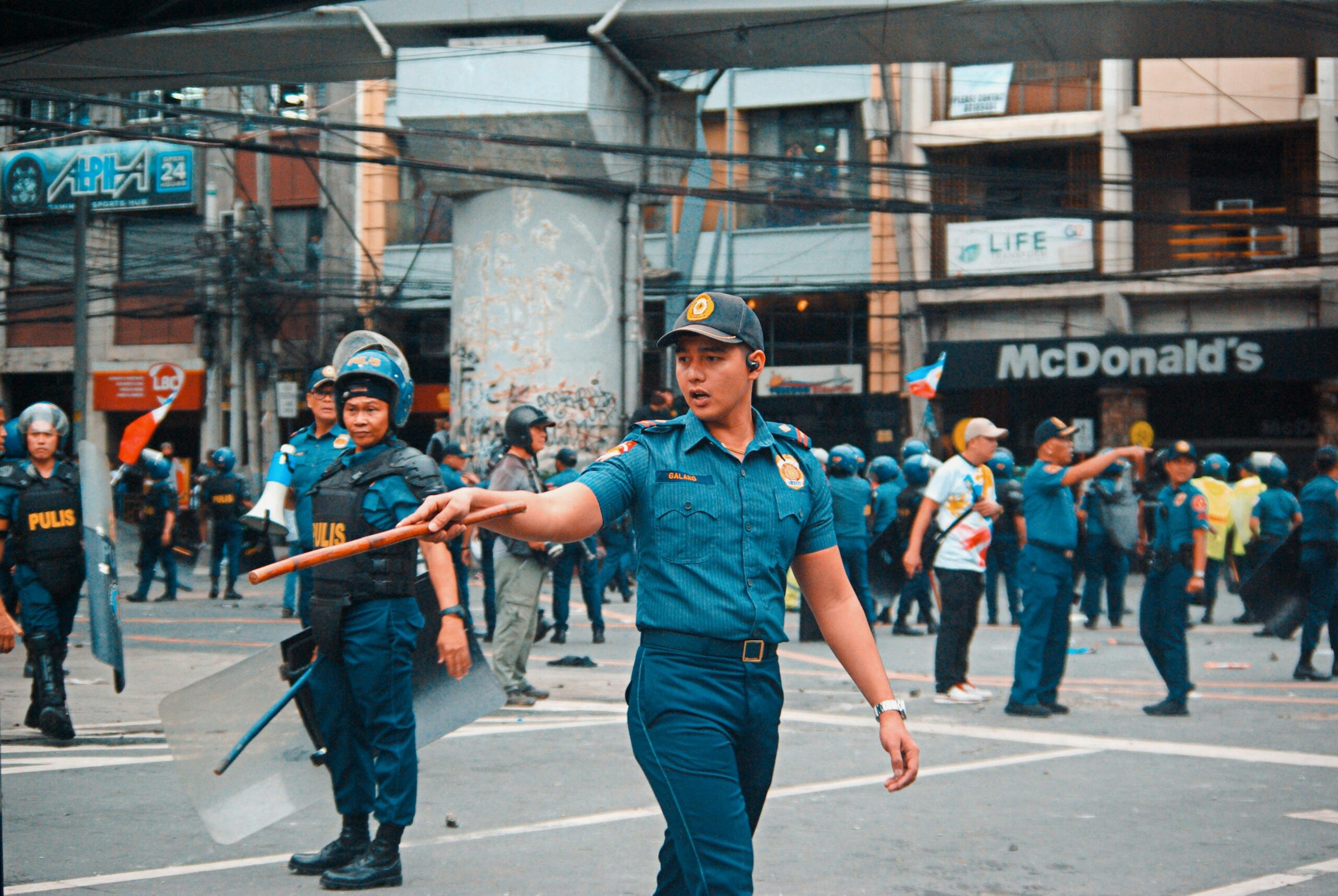
Photo: Mico Medel/Pexels
Legal experts stress that these actions must remain grounded in objective criteria rather than profiling or arbitrary enforcement.
If a minor is taken in during curfew operations
In situations where minors are apprehended during curfew enforcement, standard procedure under the Juvenile Justice and Welfare Act typically applies. This generally involves coordination with parents or guardians and referral to appropriate social welfare mechanisms rather than criminal detention.
For adults or guardians seeking recourse in disputed cases, legal remedies may include filing complaints before oversight bodies such as the Commission on Human Rights, the National Police Commission, or the Office of the Ombudsman, depending on the circumstances involved.
Courts may also be involved in certain challenges, particularly when questions arise about the legality of enforcement actions or the validity of local ordinances as applied.
ALSO READ: Metro Manila Curfew for Minors Starts This Week—Here Are the Rules
What are your thoughts on this? Let us know in the comments.
Do you have a story for the WhenInManila.com Team? Email us at wheninmanila@gmail.com or send us a direct message at WhenInManila.com’s Facebook Page. Interact with the team and join the WhenInManila.com community at WIM Squad, and join our Viber group to stay updated with the latest around the Philippines and beyond!